A good water softener is one of those household heroes that rarely receives applause. It works quietly in the background, protecting pipes, helping appliances operate efficiently, and preventing your showerhead from turning into a miniature limestone monument. But even the most dependable equipment has a limited lifespan. So, how long does a water softener last?
Most professionally installed water softeners last between 10 and 15 years. High-quality systems can sometimes continue working for 20 years or longer when they are correctly sized, regularly maintained, and supplied with suitable salt. However, lifespan is only part of the story. A system may still technically operate while delivering increasingly poor results, using too much salt, or wasting water during regeneration.
Understanding what affects your equipment can help you avoid surprise repairs and determine whether maintenance, professional servicing, or replacement is the smartest option.
The Average Lifespan of a Water Softener
Traditional salt-based water softeners generally last around 10 to 15 years. The control valve, resin tank, brine tank, and internal resin all age differently, which means one component may require attention long before the entire system needs replacement.
The resin inside the mineral tank performs much of the important work. It captures hardness minerals such as calcium and magnesium and exchanges them for sodium ions. During regeneration, the system cleans and recharges the resin so it can continue softening water.
Over time, resin beads can become damaged, coated with contaminants, or less effective. Depending on water quality and usage, resin may last approximately 10 to 15 years. The control valve can also wear out because it contains moving parts, seals, pistons, and electronic components.
A well-made Residential water softener in Calgary may provide many years of reliable performance, but equipment quality alone cannot guarantee longevity. Correct installation, appropriate programming, and ongoing maintenance are equally important.
What Determines How Long a Water Softener Lasts?
Two identical water softeners can have very different lifespans. One may still work efficiently after 15 years, while another starts behaving like a stubborn teenager after eight. Several conditions influence the difference:
- Water hardness – Extremely hard water forces the system to regenerate more frequently, increasing wear on valves and other components.
- Household water consumption – A larger household usually places greater demand on the resin and regeneration system.
- Iron and sediment levels – Iron, sand, silt, and other contaminants can foul the resin or damage internal parts.
- Equipment quality – Durable valves, reliable electronics, and premium resin typically provide better long-term performance.
- System sizing – An undersized unit must work harder and regenerate more often than a correctly sized system.
- Installation quality – Incorrect plumbing, drainage, programming, or pressure settings can shorten equipment life.
- Maintenance habits – Regular inspections and cleaning can prevent small issues from developing into expensive failures.
Local water conditions should always be considered when selecting equipment. A professional water analysis reveals more than hardness alone. It can identify iron, chlorine, sediment, and other factors that may affect system selection and performance.
Does a Commercial System Last Longer?
Commercial equipment is often built to handle heavier demand, but that does not automatically mean it will last forever. A commercial water softener in Calgary may serve a restaurant, hotel, apartment building, manufacturing facility, or other property where water use is continuous and equipment downtime is costly.
Commercial systems are usually designed with higher-capacity tanks, more durable valves, and specialized controls. Some use alternating tanks so softened water remains available while one tank regenerates. Even with this robust design, commercial equipment requires scheduled inspections because it may process thousands of litres each day.
The expected lifespan can range from 10 to 20 years, depending on operating conditions, system design, water chemistry, and maintenance. In commercial settings, efficiency matters as much as age. An older system that consumes excessive salt and water may cost more to operate than a modern replacement.
Signs Your Water Softener Is Getting Old
Water softeners do not always announce their retirement with flashing lights and dramatic music. Performance usually declines gradually, making warning signs easy to overlook.
You may notice soap no longer lathers as easily, glasses develop cloudy spots, or faucets collect scale. Laundry can feel stiff, skin may feel dry after bathing, and water heaters may become less efficient. These symptoms do not always mean the entire softener has failed, but they do indicate that the system should be inspected.
Watch for the following warning signs:
- Hardness returning soon after regeneration
- Unexplained increases in salt consumption
- Water that tastes unusually salty
- Low water pressure throughout the property
- Standing water or salt bridges inside the brine tank
- Frequent regeneration cycles
- Leaking valves, tanks, or plumbing connections
- Unusual noises during operation
- Error codes or an unresponsive control panel
- Equipment that is more than 10 to 15 years old and needs repeated repairs
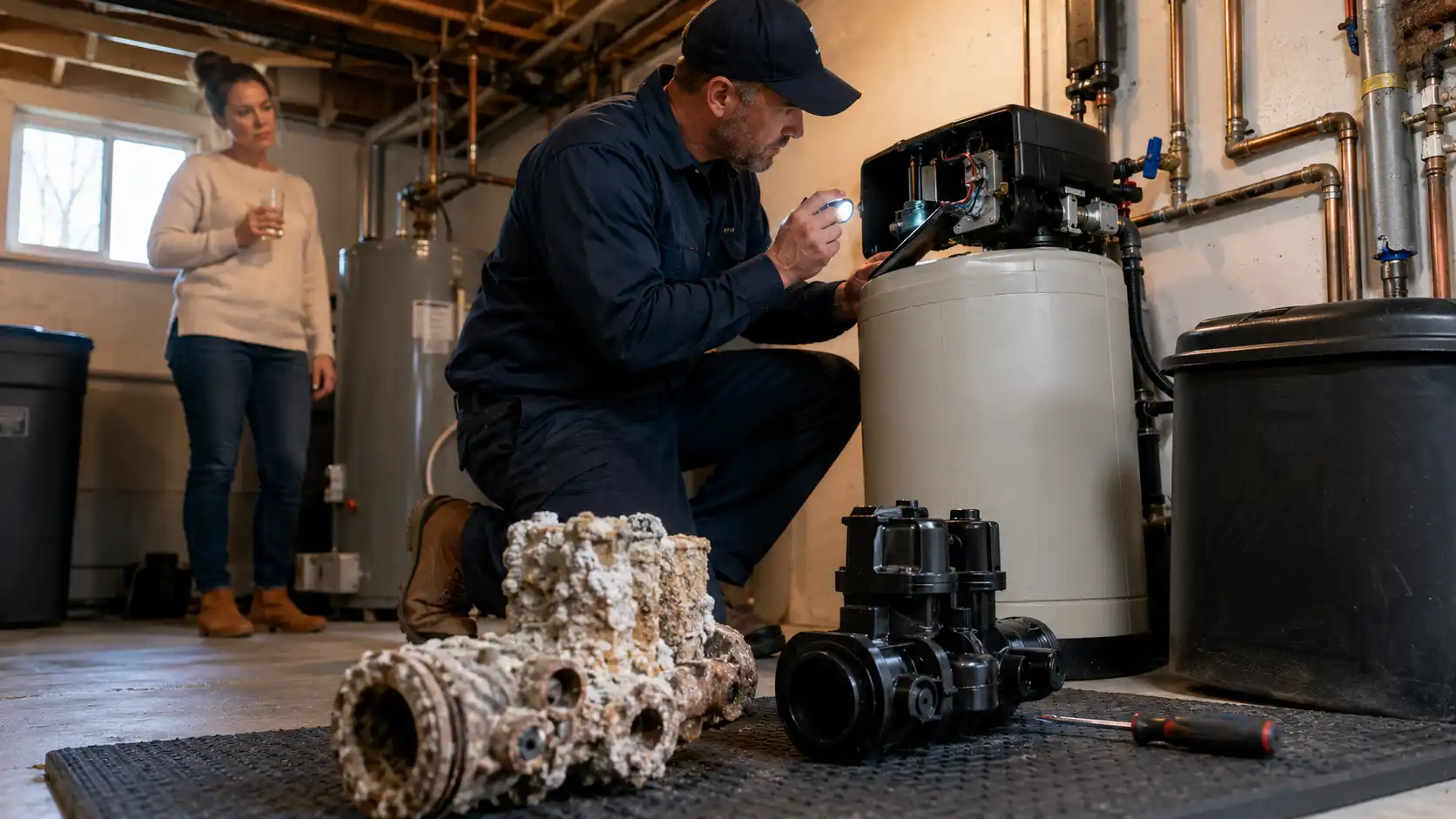
A professional technician can test the treated water, inspect the valve, evaluate the resin, and verify the programming. This makes it possible to distinguish a simple maintenance issue from a system that has reached the end of its useful life.
How Maintenance Extends Equipment Life
Routine maintenance can add years to a water softener’s service life. Salt should be checked regularly, but filling the brine tank to the ceiling is not the goal. Keeping it at a sensible level and using the recommended salt helps prevent bridging, sludge, and poor regeneration.
The brine tank should also be inspected and cleaned periodically. Salt can contain impurities that accumulate at the bottom and interfere with normal operation. If the property’s water contains iron, the resin may require a suitable cleaner. Filters installed ahead of the softener should be replaced according to their recommended schedule.
Professional maintenance offers a deeper level of protection. A technician can examine seals and injectors, test the regeneration cycle, confirm that the settings match current water use, and identify leaks before they create larger problems.
For reliable water treatment services in Calgary., working with experienced specialists is generally more effective than relying on guesswork. Water treatment equipment combines plumbing, electronics, pressure, chemistry, and programming. A do-it-yourself repair that appears inexpensive can become costly if the wrong component is replaced or the system is programmed incorrectly.
Should You Repair or Replace an Older Water Softener?
Age should not be the only factor in the repair-or-replace decision. A nine-year-old system with a minor seal problem may be worth repairing. A 16-year-old system with failing resin, an unreliable valve, and inefficient regeneration may be a poor candidate for further investment.
Consider repair when the system is relatively young, replacement parts are readily available, and the problem is isolated. Replacement often makes more sense when repair costs are substantial, failures are becoming frequent, or the existing softener no longer meets the property’s needs.
Water use can change over time. A system selected for two people may struggle after a household grows. A commercial property may expand its operations, install additional equipment, or experience higher peak demand. In these situations, replacing the old unit provides an opportunity to choose the right capacity and improve efficiency.
Modern systems may offer metered regeneration, better salt efficiency, intelligent controls, and more precise programming. Instead of regenerating according to a rigid schedule, a demand-initiated unit responds to actual water consumption. This can reduce unnecessary salt and water use while maintaining consistent results.
Why Professional Assessment Matters
Soft water problems are not always caused by the softener. A bypass valve may be partially open, a pre-filter may be blocked, plumbing may have been altered, or untreated water may be mixing with softened water. Testing and inspection are essential before making a repair or replacement decision.
Professionals can measure hardness before and after treatment, calculate daily demand, review flow rates, and assess the condition of the existing equipment. They can also recommend additional treatment when hardness is only one part of the water-quality issue.
EcoWater specialists can help property owners select, install, maintain, and service equipment based on actual water conditions. This professional approach protects the system, improves performance, and removes the entertaining but expensive tradition of replacing random parts until something finally works.
The Bottom Line
A water softener typically lasts 10 to 15 years, while a premium, well-maintained system may operate effectively for 20 years or more. Its actual lifespan depends on water chemistry, usage, sizing, installation quality, and maintenance.
The best strategy is simple – monitor performance, use suitable salt, arrange periodic servicing, and investigate changes before they become major failures. If your water softener is aging, using too much salt, or allowing scale to return, professional testing can show whether it needs maintenance, repair, or replacement.
Ready to protect your plumbing, appliances, and water quality? Contact EcoWater today to schedule a professional water assessment and discover the right softening solution for your home or business.