
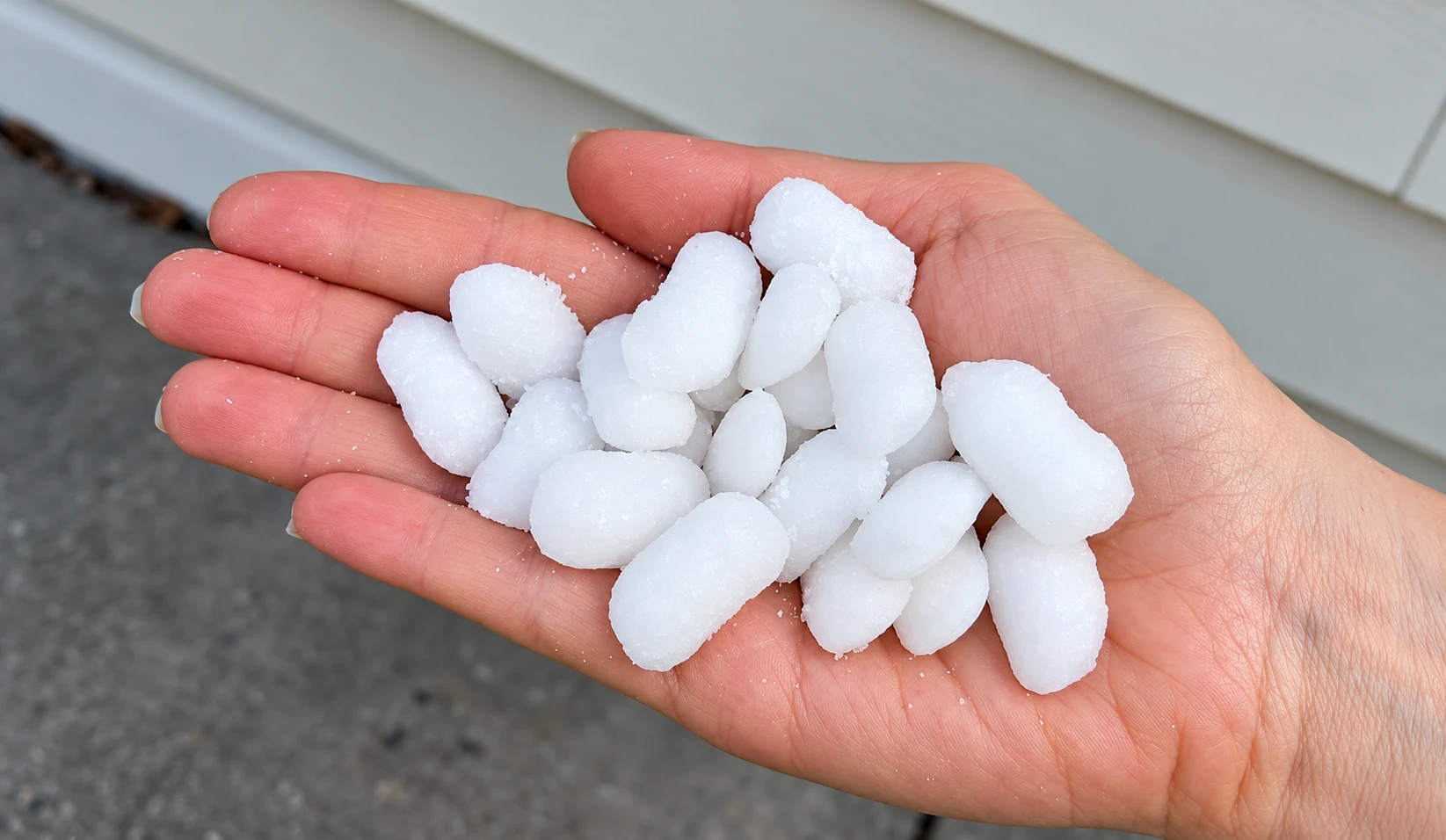
The best salt for water softeners depends on your water quality, softener type, and maintenance preferences. Salt pellets are generally the better option for homeowners seeking high purity, reliable performance, and less maintenance. Salt crystals are usually more affordable and work well in many standard water softeners. Both effectively support the regeneration process, but choosing the right one can help prevent buildup, improve efficiency, and extend your equipment’s lifespan.
Why Does Your Water Softener Need Salt?
Hard water contains calcium and magnesium, two minerals responsible for scale buildup, cloudy dishes, and stubborn soap scum. A water softener removes these minerals through a process called ion exchange.
Inside the system, resin beads capture hardness minerals. Over time, these beads need regeneration using a concentrated saltwater solution called brine.
Without enough salt, your softener gradually loses its effectiveness. Suddenly, your shower doors look frosted, your towels feel stiff, and your dishwasher starts producing abstract art on your glasses.
Fortunately, choosing the right salt helps keep everything running smoothly.
What Are Water Softener Salt Pellets?
Salt pellets are compressed pieces of highly purified sodium chloride, typically manufactured from evaporated salt.
Their uniform shape and high purity make them popular for modern residential water softeners.
Advantages of salt pellets include:
- High purity: Premium pellets often contain 99% or more sodium chloride, reducing unwanted residue.
- Less maintenance: Fewer insoluble impurities generally mean less sediment accumulating in the brine tank.
- Consistent performance: Their uniform composition supports predictable brine production.
- Wide compatibility: Many residential water softeners work well with high-quality pellets.
The main disadvantage is price. Pellets typically cost more than solar salt crystals.
They can also develop salt bridges under certain conditions, particularly when humidity is high or the salt tank is overfilled.
Still, for homeowners prioritizing convenience, pellets are often worth the additional expense.
What Are Water Softener Salt Crystals?
Salt crystals are usually produced through solar evaporation, where water evaporates naturally and leaves behind sodium chloride crystals.
Unlike compressed pellets, crystals have irregular shapes and sizes.
Their biggest advantage is affordability. They’re often less expensive while providing effective regeneration for compatible systems.
However, crystal quality varies between manufacturers.
Lower-grade crystals may contain more insoluble impurities, potentially creating sediment at the bottom of the brine tank.
This doesn’t mean crystals are bad. High-quality solar salt can perform exceptionally well, especially when the water softener is properly maintained.
The important distinction is product quality, not simply whether the salt resembles tiny snowballs or miniature diamonds.
Salt Pellets vs Crystals: Key Differences
Here’s how the two options compare.
| Feature | Salt Pellets | Salt Crystals |
| Production | Compressed evaporated salt | Usually solar evaporation |
| Purity | Typically very high | Varies by product |
| Price | Generally higher | Generally lower |
| Sediment buildup | Usually less | Potentially more |
| Maintenance | Often lower | Depends on purity |
| Best suited for | Convenience-focused homeowners | Budget-conscious homeowners |
Neither option automatically makes your water softer. When used correctly, both regenerate the same ion-exchange resin.
The real differences involve purity, cost, compatibility, and maintenance requirements.
Which Salt Works Best for Hard Water?
When dealing with particularly hard water, choosing high-purity salt becomes increasingly important.
A water softener treating very hard water may regenerate more frequently, increasing salt consumption. Lower-quality salt can introduce additional sediment into the brine tank.
For many households, premium pellets offer a practical balance between performance and maintenance.
However, salt selection alone cannot fix an improperly sized or poorly configured softener.
Water hardness, household consumption, iron concentration, and regeneration settings all influence system performance.
That’s why professional water testing and equipment assessment can be more valuable than simply switching salt brands.
Common Mistakes When Adding Water Softener Salt
Even excellent salt won’t help much if the softener isn’t maintained correctly.
Avoid these common mistakes:
- Overfilling the brine tank: Follow your manufacturer’s recommended salt level.
- Ignoring salt bridges: Hardened salt can prevent proper brine formation.
- Using unsuitable salt: Rock salt and products with excessive impurities may cause maintenance problems.
- Mixing specialty additives carelessly: Iron-removing formulations aren’t appropriate for every system.
- Neglecting regular inspections: Sediment buildup and incorrect settings can reduce efficiency.
A quick visual inspection occasionally helps identify problems before they become expensive repairs.
For persistent issues, professional servicing is preferable to experimenting with unfamiliar components.
When Should You Contact a Water Treatment Professional?
If your softener consumes excessive salt, leaves mineral deposits, or produces inconsistent water quality, the problem may extend beyond your choice of salt.
Experienced specialists providing water treatment services in Calgary can test your water, evaluate your equipment, and recommend the most suitable salt and regeneration settings.
Professional maintenance can also identify resin deterioration, clogged injectors, and other problems that a new bag of salt simply cannot solve.
After all, replacing salt is easy. Diagnosing an inefficient water treatment system is another story.
Final Verdict: Are Pellets Better Than Crystals?
For most homeowners, high-purity salt pellets are the preferred choice because they generally produce less residue and simplify maintenance.
Salt crystals remain an excellent budget-friendly alternative when they’re sufficiently pure and approved for your equipment.
Ultimately, the best salt is the one recommended for your specific softener and water conditions.
Want softer water without the guesswork? Contact EcoWater Systems today for professional water testing, water softener recommendations, and reliable maintenance services. Let experienced specialists help you enjoy cleaner fixtures, better-performing appliances, and consistently soft water throughout your home.